
The short answer
You likely need a new chimney liner if the old one is cracked or crumbling, if you notice smoke smells, poor draft or flue debris, or if you're converting a boiler from oil to gas. EverHearth inspects the flue with a camera, cleans it, and installs a properly sized liner and cap, following the NFPA 211 standard for yearly inspections.
A chimney liner is the channel inside your chimney that carries smoke and exhaust gases up and out of the house. It shields the surrounding brick and nearby wood framing from heat and corrosive byproducts, and it helps your fireplace or heating appliance draft properly. When a clay tile liner cracks, a masonry flue starts to crumble, or your heating system changes, a new liner is often the right fix. EverHearth Chimney Service installs liners for fireplaces, wood stoves, inserts, and oil and gas heating appliances in homes across Staten Island and nearby communities.
Signs you need a new chimney liner
Liner damage usually stays hidden inside the chimney, so most homeowners notice the side effects first. If you see any of these signs, schedule an inspection before your next fire or the start of heating season.
Some of these signs can also point to a damaged crown, a missing cap or worn flashing. That's why we look at the whole chimney before recommending a liner.
- A smoke or creosote smell in the room, especially on humid days or when the fireplace isn't in use
- Poor draft: smoke rolling into the room, fires that are hard to start, or a heating appliance that struggles to vent
- Pieces of clay tile, mortar or brick flakes collecting in the firebox or at the base of the flue
- White staining on the outside brick, a sign that moisture is moving through the masonry
- Water in the firebox or at the bottom of the chimney after rain
- A boiler or furnace that has been switched, or is about to be switched, from oil to gas
- A new stove, insert or heating appliance that needs a flue sized to match it
What's included in a liner installation
Every liner installation follows the same basic checklist. If we find something during the work that changes the plan, we stop and talk with you before going further.
- Inspection of the chimney, flue and connected appliance, including a camera look inside the flue
- Cleaning the existing flue to remove creosote, soot and loose debris
- Measuring the flue so the new liner is sized for your appliance
- Removing broken tile or obstructions when needed for the liner to pass
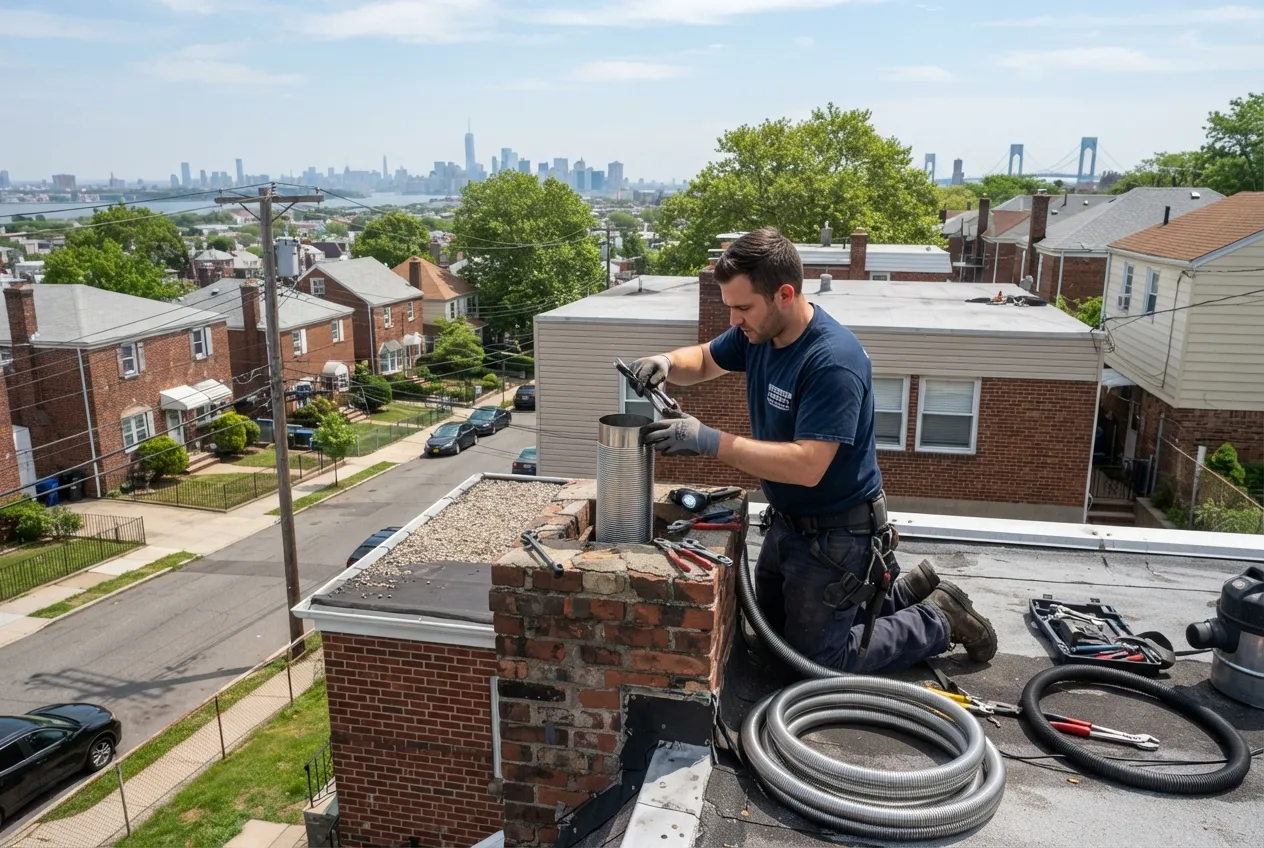
- Installing the new liner from the top of the chimney down to the appliance connection or smoke chamber
- Insulating the liner where the installation calls for it
- Fitting a top plate and chimney cap to keep out rain, debris and animals
- Connecting the liner to the appliance or fireplace and checking that it drafts properly
- A final camera check and cleanup of the work area
- Photos and a plain-language walkthrough of the finished work
How our crew works inside your home and on the roof
Inside, we lay drop cloths from your door to the fireplace or appliance and seal off the opening before any brushing begins. Our HEPA vacuums run while we work, so soot and dust are pulled out of the room instead of settling on your floors and furniture. We use rotary brushes to clean the old flue walls, which lets the new liner go in cleanly and gives the camera a clear view of the flue.
On the roof, we set up safe access with ladders and fall protection, check the crown, cap and flashing, and feed the liner down from the top. If the chimney is tall or the roof is steep, we may need extra equipment, and we'll tell you ahead of time. Our technicians are certified, and they'll explain each step as they go so you know what's happening above your head.
The standard we follow
The NFPA 211 standard calls for chimneys, fireplaces and vents to be inspected once a year. Chimney professionals use three inspection levels. Level 1 fits when nothing about the system has changed. Level 2 is called for when the system changes, such as a new appliance or a switch of fuel, or when the home is sold. Level 3 applies when a hidden hazard can only be reached by opening part of the chimney or building.
Because a liner installation usually goes along with a change to the system, we typically start with a Level 2 inspection, including a camera look inside the flue. We only recommend Level 3 work when there's a specific reason to open the chimney or a wall.
Oil-to-gas conversions deserve special mention. When a New York City building converts its boiler from oil to gas, the chimney has to be evaluated as part of the work, and a new liner is often needed because gas exhaust produces acidic condensate that can corrode a masonry flue. If a conversion is on your calendar, contact us early so the chimney work fits your heating contractor's schedule. The city's heat season runs from October 1 through May 31, so late spring and summer are usually the easiest times to plan liner work.
What affects the price
We give you a written quote after the inspection, because every chimney is different. These are the main things that affect it:
If a repair isn't urgent, we'll tell you, and you can decide whether to handle it now or later.
- Chimney height and how easy it is to reach the roof safely
- Fuel type: wood, oil and gas each need a liner suited to their exhaust
- Flue size, shape and condition, including whether old tile has to be removed
- How much creosote or soot has built up and needs cleaning first
- Whether a camera inspection is needed beyond the standard check
- Repairs found along the way, such as a cracked crown, loose bricks or damaged flashing
- Liner material and whether insulation is required
How a visit works
First, we schedule an inspection and ask about your fireplace or heating appliance, its fuel and any changes you're planning. At the inspection, we look at the chimney inside and out, run a camera through the flue, and show you what we find.
Next, you get a written quote that lists the liner type, the work involved and anything else we recommend. Once you approve it, we book the installation. Many single-flue jobs can be finished in one visit, while larger or more complicated chimneys can take longer.
On installation day, the crew protects your home, cleans the flue, installs and connects the liner, and tests the draft. Before we leave, we clean up, walk you through photos of the finished work, and remind you when your next yearly inspection is due.
Chimney Liner Installation by city
- Chimney Liner Installation in Tottenville
- Chimney Liner Installation in Charleston
- Chimney Liner Installation in Annadale
- Chimney Liner Installation in Huguenot
- Chimney Liner Installation in Prince’s Bay
- Chimney Liner Installation in Woodrow
- Chimney Liner Installation in Arden Heights
- Chimney Liner Installation in Rossville
- Chimney Liner Installation in Great Kills
- Chimney Liner Installation in Eltingville