
What Chimney and Air Duct Work Costs, and Why
Serving Staten Island and nearby cities.
- Diagnosis before any repair
- Photos of every finding
- Written price before we start
Most people who call about a chimney or duct job want a price first, and that makes sense. The honest answer is that the cost depends on things we can only judge at the house: how tall the chimney is and how we get onto the roof, what fuel you burn, the size and condition of the flue, and how much buildup is inside. Duct and dryer vent work depends on how many vents and returns you have and how easy they are to reach. This page explains what drives the cost of each service we offer on Staten Island, so you know what you are paying for and can compare quotes fairly. Once we see the job, we give you a written price before any work begins.
What affects the price of a chimney sweep
A sweep removes soot and creosote from the flue, smoke chamber and firebox. Some chimneys take far longer than others to clean properly. These are the main factors:
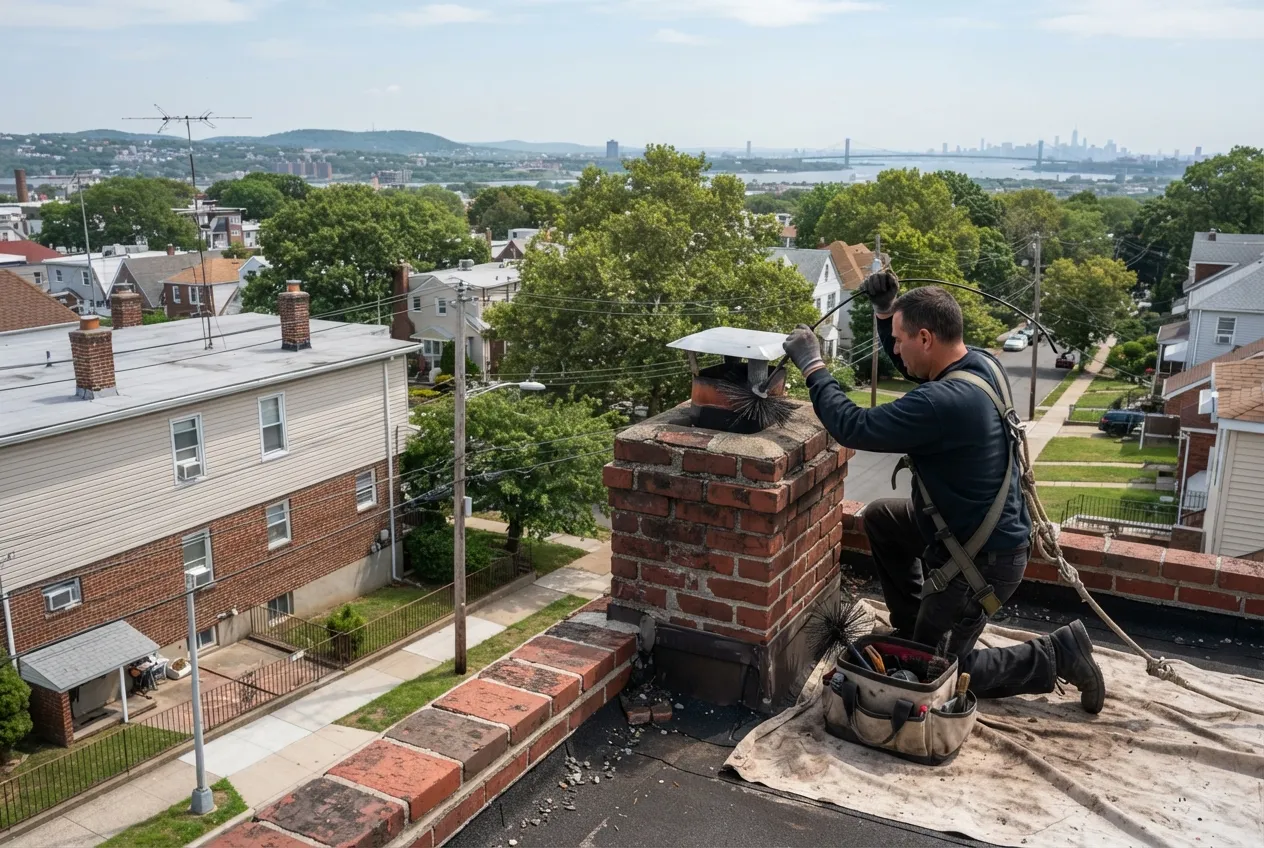
- Height and roof access: a short chimney on a low, gentle roof is quicker and safer to reach than a tall chimney on a steep or multi-story roof that needs extra ladders or roof anchors.
- Fuel type: wood-burning fireplaces and stoves leave creosote that can be heavy and glazed. Oil and gas appliances leave different deposits and call for different tools.
- Flue size and shape: a larger flue, an oddly shaped flue, or more than one flue in the same chimney adds time.
- Amount of buildup: light soot brushes out easily. Thick or glazed creosote may need extra passes or special removal.
- Condition: loose bricks, cracked tiles or animal nests change how carefully we have to work, and they may point to repairs.
Chimney inspections: Level One versus Level Two
The national fire protection standard for chimneys calls for chimneys, fireplaces and vents to be inspected once a year. Chimney professionals use different inspection levels, and the level affects the time and equipment involved.
A Level One inspection fits when nothing about your system has changed. Our technician checks the readily accessible parts of the chimney, the fireplace or appliance connection, and the exterior, looking for obstructions, buildup and obvious damage.
A Level Two inspection is called for when the system changes, such as a new appliance or a switch from one fuel to another, or when a home is being sold. It includes a camera run down the inside of the flue to look for cracked tiles, gaps in joints and hidden damage. Because it takes more time and equipment, it costs more than a Level One inspection. When a hidden hazard can only be reached by opening part of the chimney or the building, a Level Three inspection is needed, and we explain that scope in writing first.
Repairs, liners and rebuilding
Repair costs vary more than anything else we do, because no two chimneys fail the same way. Replacing a few bricks or resealing a crown is a small job. Tuckpointing a whole chimney, repairing a fireplace or damper, or rebuilding a chimney from the roofline up is a larger one. Materials, the extent of the damage, and roof access all shape the price.
Liner installation depends on the flue's size and shape, the height of the chimney, and the type of appliance it serves. When a New York City building converts its boiler from oil to gas, the chimney has to be evaluated as part of the work, and a new liner is often needed because gas exhaust creates acidic condensate that can eat away at a masonry flue.
Chimney caps and chase covers are priced by size, material and how the chimney top is built. Waterproofing depends on the surface area and the condition of the masonry, since cracks are repaired before any sealer goes on.
Air duct and dryer vent cleaning
Duct cleaning is priced by the system, not by a flat number for every home. The number of supply vents and return vents, the length and layout of the ductwork, and how much dust, debris or other contamination is inside all matter. The U.S. EPA advises cleaning ducts when there is substantial visible mold growth, vermin, or excessive dust and debris. It also notes that duct cleaning has not been shown to prevent health problems, so we tell you plainly whether your system needs it.
Dryer vent cleaning depends on the length of the vent run, how many turns it has, and where it exits, whether through a wall, the roof or a crawl space. According to the U.S. Fire Administration, failure to clean is the leading factor in home clothes dryer fires.
Apartments and co-ops add their own steps. Building rules, elevator scheduling, shared vents, and limited working hours can all affect time and cost. Many buildings want work finished outside the city's heat season, which runs from the start of October to the end of May, when owners must keep apartments heated.
Why very cheap duct cleaning offers turn into upsells
You have probably seen ads for whole-house duct cleaning at a price that looks too good to be true. The EPA warns consumers to research the process before responding to these offers. Often the low price covers only a quick pass at a handful of vents. Once the crew is inside, the bill grows with charges for extra vents, returns, the main trunk lines, or chemical treatments you may not need. The EPA also urges care with chemical treatments in ducts.
A real cleaning reaches the whole system, and that takes proper equipment and time. We would rather show you a full, honest price up front than surprise you at the door.
How we give you a price
Our certified technicians look at the job first, then give you a written price that spells out what is included. If we find something during the work that changes the scope, such as hidden flue damage, we stop, show you, and put any change in writing before going further. You decide what gets done.
FAQ
Common questions
Why won't you quote a price over the phone?
Height, roof access, fuel type, flue condition and buildup all change the work involved. A phone price would be a guess. We give a written price after we see the job.
Do I need a Level Two inspection?
You need one if you added a new appliance, switched fuels, or are buying or selling a home. If nothing has changed, a Level One inspection usually fits.
Does switching my boiler from oil to gas affect my chimney cost?
Often, yes. The chimney has to be evaluated during the conversion, and many masonry flues need a new liner because gas exhaust produces acidic condensate.
How often should my ducts be cleaned?
Only when they need it. The EPA points to substantial visible mold, vermin, or excessive dust and debris as reasons to clean.
Do you work in apartments and co-ops?
Yes. We coordinate with building management on access, scheduling and shared vents, which can affect the time and price of the job.
Will the price change once you start?
Not without your approval. If we find something that changes the scope, we show you and put any change in writing first.
Schedule a chimney or vent inspection
Tell us what you are noticing, whether it is a smell, a leak, a slow dryer or just a yearly check. We will set up a visit, show you what we find, and give you a written price before any work begins.