
The short answer
A chimney inspection is a structured check of your chimney, flue, and connected appliance to confirm they can safely carry smoke and exhaust out of your home. The NFPA 211 standard calls for one every year, and the level of inspection depends on whether anything about your system has changed.
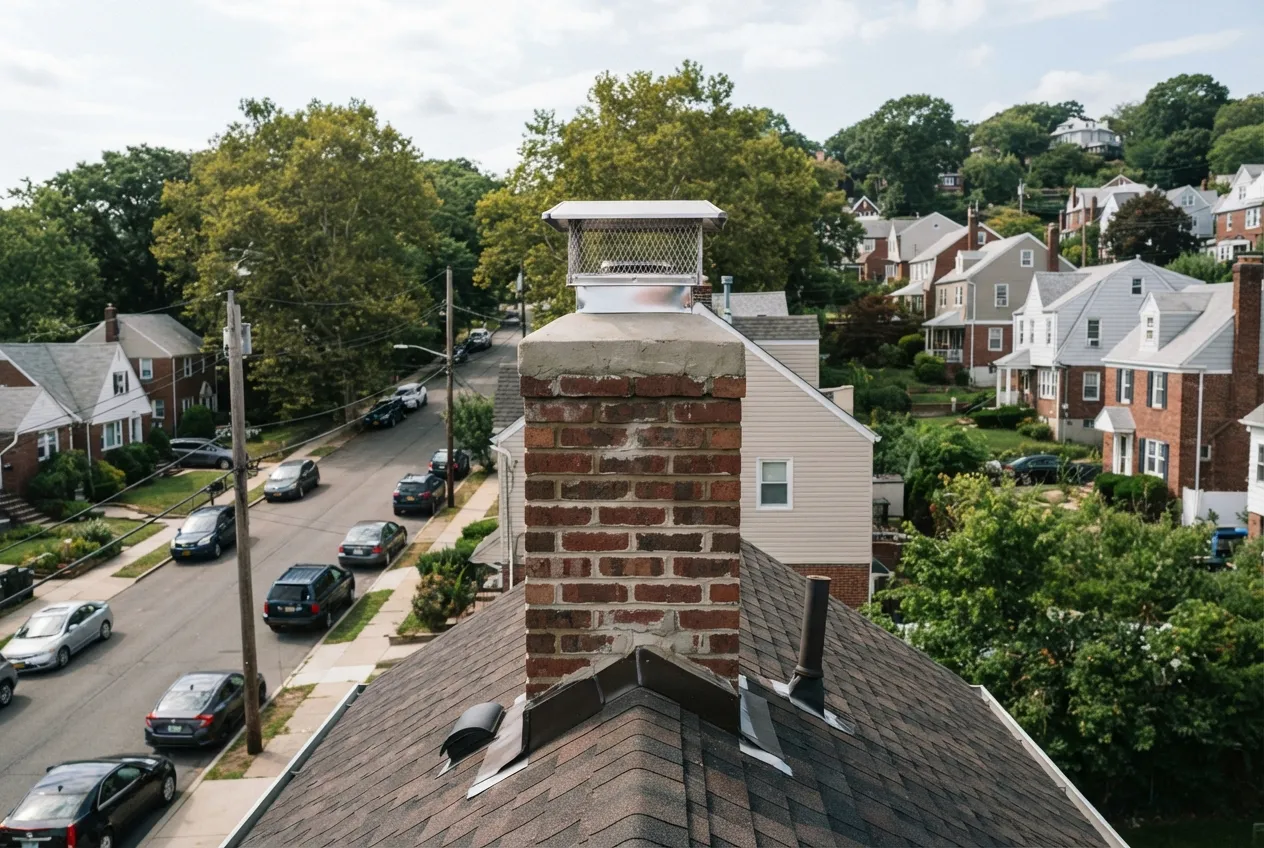
A chimney inspection tells you whether your fireplace, wood stove, or heating flue is safe to use before you light it or turn up the heat. EverHearth Chimney Service sends certified technicians to homes across Staten Island and nearby communities. They inspect older masonry chimneys that vent oil or gas boilers, and factory-built fireplaces in newer houses. We check the parts you can see and the parts you can't: the flue liner, the smoke chamber, the damper, the crown, and the flashing where the chimney meets the roof. When we're done, you get a plain written account of what we found and what, if anything, needs attention.
Signs you need a chimney inspection
Even if you haven't noticed a problem, a yearly inspection is the baseline. Certain signs mean you shouldn't wait for your usual appointment. If you notice any of these, stop using the fireplace or stove until the chimney has been looked at.
- A smoky, tar-like, or campfire smell in the room, especially on humid days or when the air conditioning runs
- Poor draft: smoke rolls into the room instead of rising up the flue, or fires are hard to start and keep going
- Debris, tile pieces, or flakes of brick or mortar collecting in the firebox
- White, chalky staining (efflorescence) on the outside brick, a sign that water is moving through the masonry
- Scratching, chirping, or fluttering sounds from the chimney, which can mean birds or animals are nesting inside
- Water dripping into the firebox or rust on the damper and firebox floor
- You've bought the home, added a new stove or insert, or switched heating fuel
What is included in the inspection
Every inspection follows the same checklist, so nothing gets skipped because it's hard to reach. We record what we see as we go and photograph anything that needs your attention.
- Firebox: brick, mortar joints, and refractory panels checked for cracks, gaps, and heat damage
- Damper: opened and closed to confirm it seals and moves freely
- Smoke chamber and smoke shelf: checked for creosote buildup, debris, and rough or missing parging
- Flue liner: checked along its length for cracks, missing mortar, gaps, and blockages
- Creosote: amount and type noted, since heavy or glazed buildup raises fire risk
- Appliance connection: stove pipe, insert, or boiler connector checked for proper fit and clearance
- Chimney exterior: brick, mortar, and crown checked for cracks, spalling, and water entry
- Flashing: the seal between the chimney and roof checked for gaps and lifting
- Chimney cap and spark screen: present, secure, and free of nesting material
- Clearances: visible combustible materials near the chimney noted
How our crew works in your home and on the roof
Inside, the technician lays drop cloths from the door to the hearth before opening the damper or touching the firebox. We keep a HEPA vacuum running at the fireplace opening when we disturb soot, so fine dust is pulled away instead of drifting into the room. If the inspection shows enough buildup that the flue needs sweeping, we'll tell you first. Sweeping is done with rotary brushes sized to your flue, which scrub the liner walls while the vacuum captures what falls.
For the flue liner, we use a camera where it fits the job. The camera is fed up the flue and shows the liner joints and walls on a screen. You can watch, and we save images of anything we flag. This is how we find cracks and gaps that a flashlight and mirror can't reach.
On the roof, the technician checks the crown, cap, flashing, and outside masonry up close, as long as the roof can be accessed safely. If a steep pitch, ice, or rain makes the roof unsafe that day, we'll say so and arrange a return visit for the exterior portion rather than guess at what's up there.
The standard we follow
Our inspections follow NFPA 211, the standard that calls for chimneys, fireplaces, and vents to be inspected once a year. Chimney professionals use three inspection levels, and we'll tell you which one your situation calls for. A Level 1 inspection is for chimneys in regular use where nothing has changed. A Level 2 inspection is for when the system changes, such as a new appliance or a switch of fuel, or when the home is sold, and it includes the camera inspection of the flue. A Level 3 inspection is only for cases where a suspected hidden hazard can be reached only by opening part of the chimney or building. We won't recommend that step unless earlier findings point to it.
Fuel changes matter in Staten Island, where many homes have older masonry chimneys. When a New York City building converts its boiler from oil to gas, the chimney has to be evaluated as part of the work. A new liner is often needed, because gas exhaust produces acidic condensate that can corrode a masonry flue. If you're planning a conversion, an inspection before the work begins helps you plan for the liner. It also cuts down on surprises.
What affects the price
We don't quote a single flat figure for every chimney, because the time and equipment involved vary. We'll explain your price before any work starts. These are the factors that move it:
- Chimney height and roof access, including roof pitch and whether extra ladders or safety setup are needed
- Fuel type: wood, oil, gas, or pellet, since each leaves different residue and has different liner requirements
- Flue size, shape, and condition, and whether there is more than one flue in the chimney
- How much creosote, soot, or debris has built up
- Whether a camera inspection of the flue is needed, as in a Level 2 inspection
- Whether repairs are needed afterward, which we quote separately so you can decide
How a visit works
When you book, we'll ask what the chimney serves, when it was last inspected, and whether anything has changed or you've noticed any warning signs. That tells us which inspection level to plan for. For wood-burning fireplaces and stoves, please let the fire go out and the ashes cool for at least a day before we arrive.
At the appointment, the technician protects the area, works through the checklist inside and on the roof, and runs the camera if your inspection calls for it. Afterward, we walk you through the findings and leave a written report with photos. If something needs repair, we explain what it is, why it matters, and how urgent it is. Many homeowners schedule before New York City's heat season begins on October 1, so the chimney is ready before heating systems run every day.
Chimney Inspection by city
- Chimney Inspection in Tottenville
- Chimney Inspection in Charleston
- Chimney Inspection in Annadale
- Chimney Inspection in Huguenot
- Chimney Inspection in Prince’s Bay
- Chimney Inspection in Woodrow
- Chimney Inspection in Arden Heights
- Chimney Inspection in Rossville
- Chimney Inspection in Great Kills
- Chimney Inspection in Eltingville