
The short answer
Plan on a chimney sweep when your yearly inspection finds buildup, or sooner if you notice smoke smells, poor draft, or debris in the firebox. EverHearth's certified technicians clean the flue with rotary brushes and HEPA vacuums, protect your floors, and give you a plain report on the chimney's condition.
A chimney sweep removes the creosote, soot, and debris that build up inside your flue each time you burn wood, oil, or gas. Left in place, that buildup narrows the flue, weakens the draft, and can catch fire. EverHearth Chimney Service sends certified technicians to homes across Staten Island and nearby communities to clean fireplace, wood stove, and heating appliance flues and to look closely at the chimney while we are there. This page covers when a sweep is due, what our visit includes, how we keep your home clean, and what changes the scope of the job, so you know what to expect before we arrive.
Signs you need a chimney sweep
Many homeowners call us after noticing something small that turns out to point to a bigger issue. Any of the signs below is a good reason to have the chimney swept and looked over before you light another fire or start the heating season.
- A smoky or tar-like creosote smell, especially on humid days or when the air conditioning runs
- Poor draft: smoke rolls into the room, fires are hard to start, or they die down quickly
- Debris, soot clumps, or flakes of brick or mortar collecting in the firebox
- White, chalky staining on the brick, a sign that moisture is moving through the masonry
- Scratching, chirping, or rustling noises from inside the chimney, which can mean birds or animals are nesting
- Water or rust stains in the firebox or around the damper after rain
What a chimney sweep includes
Every sweep follows the same checklist, so nothing gets skipped. If we find something that needs more than cleaning, we explain it and let you decide how to proceed.
- Floor and furniture protection with drop cloths from the door to the fireplace
- Removal of creosote and soot from the full length of the flue with rotary brushes
- Cleaning of the smoke chamber, smoke shelf, damper, and firebox
- Removal of nesting material and loose debris
- A visual check of the firebox, damper, liner, and accessible masonry
- A check of the chimney cap, crown, and flashing from the roof when it is safe to access
- A camera inspection of the flue where conditions call for a closer look
- A written summary of what we found, with photos when available
How our crew works inside your home and on the roof
Inside, we lay drop cloths along our path and around the hearth before any tools come out. We seal the fireplace opening and run a HEPA vacuum throughout the cleaning, so the soot we loosen goes into the vacuum instead of into your living room. Rotary brushes sized to your flue scrub the walls from the bottom up, and we hand-clean the smoke chamber and damper area, where buildup tends to be heaviest.
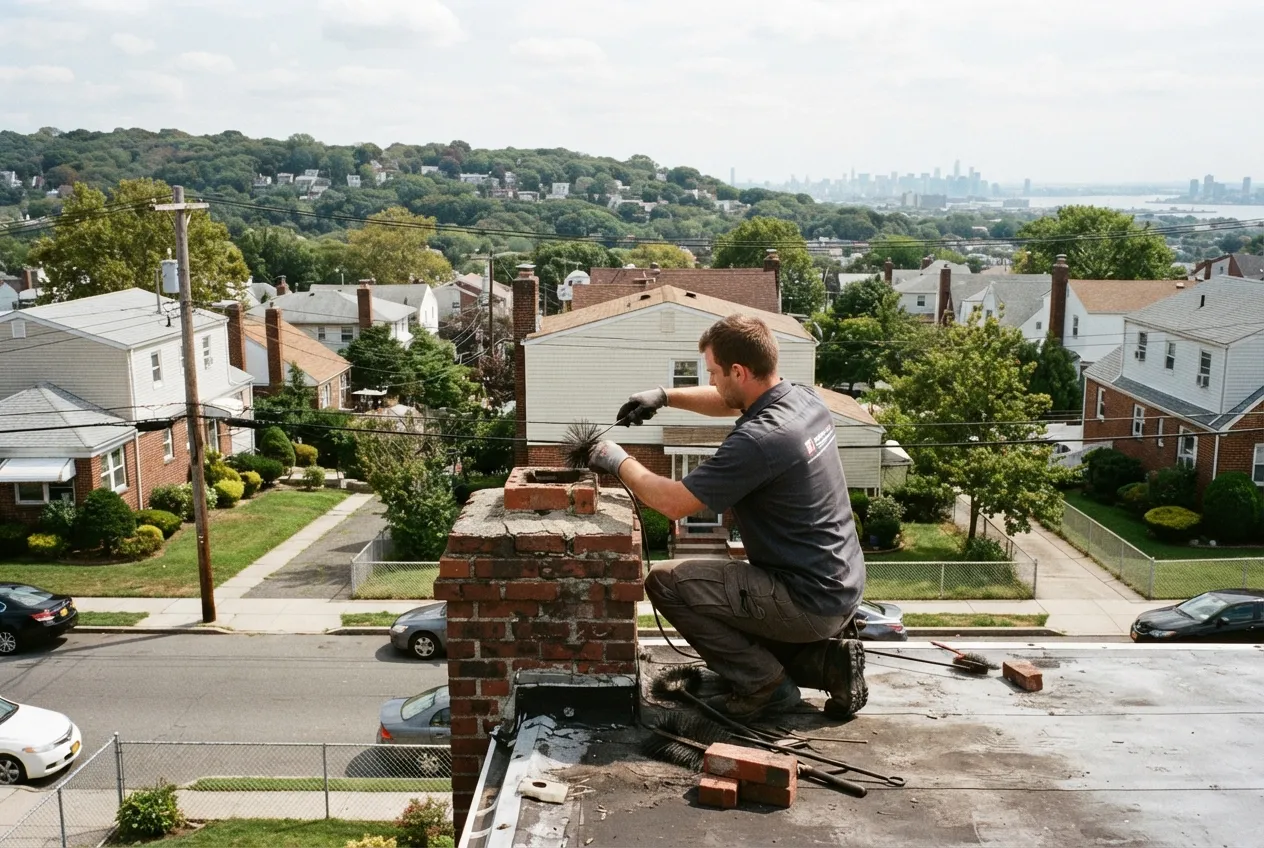
When a closer look is needed, we run a camera up the flue to check for cracked tiles, gaps in the mortar joints, or blockages we cannot see from the firebox. On the roof, we check the cap and spark screen, the crown, and the flashing where the chimney meets the roof, and we clear debris from the top of the flue. We only go up when weather and roof conditions allow it safely. When we are done, we vacuum the work area and take the drop cloths out with us.
The standard we follow
We work to the NFPA 211 standard, which calls for chimneys, fireplaces, and vents to be inspected once a year. Chimney professionals use three inspection levels. Level 1 applies when nothing about the system has changed. Level 2 applies when the system changes, for example a new appliance or a switch to a different fuel, or when the home is sold. Level 3 applies when a hidden hazard can only be reached by opening part of the chimney or building.
If your home is switching its boiler from oil to gas, the chimney needs to be evaluated as part of that work. A new liner is often needed, because gas exhaust produces acidic condensate that can corrode a masonry flue. Since the city's heat season runs from October 1 through May 31, many owners schedule their sweep and inspection in late summer or early fall, before the heating system runs every day.
What affects the price
Every chimney is different, so we look at a few factors before giving you a quote. We explain the scope before any work begins.
- Chimney height and how easily and safely we can reach the roof
- Fuel type: wood, oil, and gas leave different kinds and amounts of residue
- Flue size, shape, and condition, including whether it has a liner
- How much creosote or debris has built up since the last cleaning
- Whether a camera inspection is needed to evaluate the flue
- Whether repairs are needed, such as a new cap, crown work, or liner replacement
How a visit works
When you contact us, we ask what you burn, how often you use the fireplace or stove, and whether you have noticed any of the warning signs. We schedule a time and ask that the fireplace not be used for at least a day beforehand, so the firebox and flue are cool when we arrive.
On the day of the visit, the technician walks through the job with you, sets up protection, and completes the sweep and inspection. Afterward, we go over what we found, show you photos when we have them, and point out anything that needs attention now or should be watched. If repairs are recommended, you get a separate explanation and can decide when to schedule them.