
The short answer
Yes, EverHearth Chimney Service handles chimney sweeping, inspection, repair, liners, dryer vent cleaning and air duct cleaning in Prince's Bay (ZIP codes 10309 and 10312). We're about three miles away and recommend a yearly chimney inspection, ideally before New York City's heat season starts on October 1.
EverHearth Chimney Service works throughout Prince's Bay, about three miles from our Staten Island office. We serve homes in ZIP codes 10309 and 10312, from detached houses with wood-burning fireplaces to attached homes that vent a gas boiler or water heater through the chimney. Our certified technicians sweep, inspect and repair chimneys, install liners, and clean dryer vents and air ducts. This page covers what Prince's Bay homes tend to need, how South Shore weather affects masonry and vents, and how to plan service around the heating season.
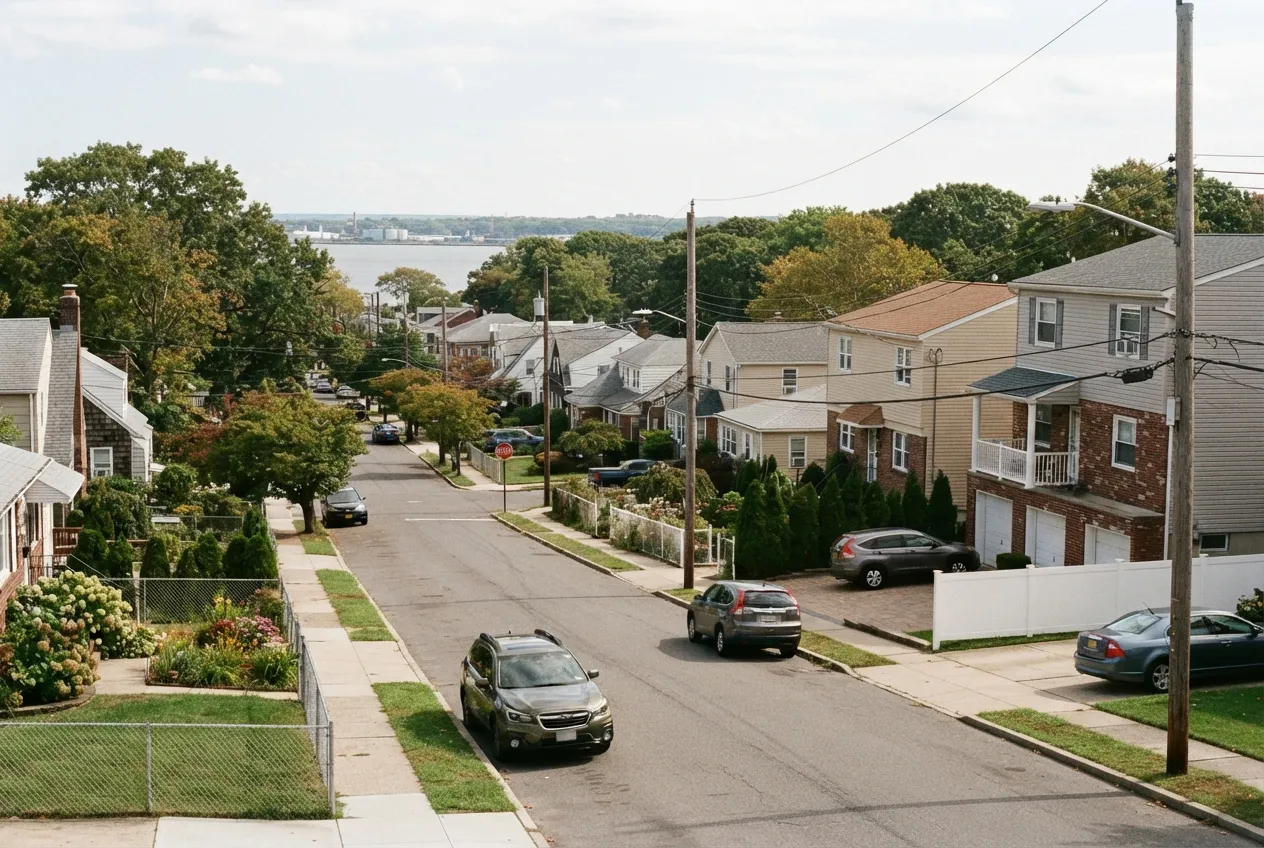
The homes we service in Prince's Bay
Prince's Bay is mostly residential. You'll find detached single-family homes, semi-detached houses and newer attached townhomes, and many of them have a masonry chimney serving a fireplace, a boiler or furnace flue, or both. Some newer homes vent gas appliances through a metal liner or a direct vent instead of a traditional open flue.
Each setup needs different attention. A wood-burning fireplace builds up creosote. A gas appliance flue is more likely to have condensation damage or a blockage from nesting animals. We look at the whole system before recommending anything. Here is what we handle in Prince's Bay:
- Chimney sweeping and chimney inspections
- Chimney repair, including crowns, mortar joints and flashing
- Chimney liner installation for wood, gas and oil appliances
- Chimney caps and chase covers
- Chimney waterproofing
- Fireplace and damper repair
- Chimney rebuilding when masonry is beyond repair
- Dryer vent cleaning and air duct cleaning
How South Shore weather wears on chimneys
Prince's Bay sits on Staten Island's South Shore, close to the water. That means damp air, wind-driven rain during coastal storms and nor'easters, and winters that swing above and below freezing. Brick and mortar absorb water. When that water freezes, it expands and pushes the masonry apart. Over a few seasons, this shows up as flaking brick faces, crumbling mortar joints and cracked chimney crowns.
Moist, salty air is also hard on metal. Chase covers on framed chimneys and older caps can rust through, letting rain run straight into the flue. Once water is inside, it can stain ceilings, rot framing around the chimney and damage dampers and fireboxes.
The fixes are usually straightforward if caught early. A properly fitted cap and chase cover keep rain and animals out. A breathable waterproofing treatment slows water absorption while letting the masonry dry. Crown and mortar repairs close the gaps. When freeze-thaw damage has gone too far, we rebuild the affected section instead of patching it repeatedly.
Annual inspections and the heating season
The NFPA 211 standard calls for chimneys, fireplaces and vents to be inspected once a year. A Level 1 inspection fits most homes where nothing has changed. A Level 2 inspection applies when you add a new appliance, switch fuels or sell the home. A Level 3 inspection is reserved for cases where a suspected hidden hazard can only be reached by opening part of the chimney or building.
New York City's heat season runs from October 1 through May 31. If you own a two-family home or rent out part of your house, that's when you must keep apartments heated to the city's minimum temperatures, so a flue problem in January is more than an inconvenience. We suggest booking your inspection and sweep in late summer or early fall, which leaves time for any repairs before the boiler runs daily.
Oil-to-gas conversions and chimney liners
Some Staten Island homes still run oil boilers, and many owners are switching to gas. When a New York City building converts its boiler from oil to gas, the chimney has to be evaluated as part of the work. A new liner is often needed because gas exhaust produces acidic condensate that can corrode a masonry flue. We inspect the flue, confirm the right liner size for the new appliance and install it so the conversion can move forward.
Dryer vents and air ducts
According to the U.S. Fire Administration, failure to clean is the leading factor contributing to clothes dryer fires in homes. If your dryer takes longer than it used to, the laundry room feels hot, or you smell scorching, the vent line is likely clogged with lint. We clean the full run from the dryer to the exterior hood.
For air ducts, we follow the U.S. EPA's guidance. Cleaning makes sense when there is substantial visible mold, signs of vermin, or excessive dust and debris. The EPA also notes that duct cleaning hasn't been shown to prevent health problems, so we won't claim it will. We explain what we see before recommending any work, and we're cautious with chemical treatments.
Neighborhoods near Prince's Bay we also serve
Our crews work throughout the South Shore and nearby areas, including Annadale, Huguenot, Woodrow, Arden Heights and Rossville. If you live in one of these neighborhoods, you'll get the same inspection process and the same service options described here.
ZIP codes we serve
- 10309
- 10312
Services in Prince’s Bay
- Chimney Sweep in Prince’s Bay
- Chimney Inspection in Prince’s Bay
- Chimney Repair in Prince’s Bay
- Air Duct Cleaning in Prince’s Bay
- Chimney Liner Installation in Prince’s Bay