
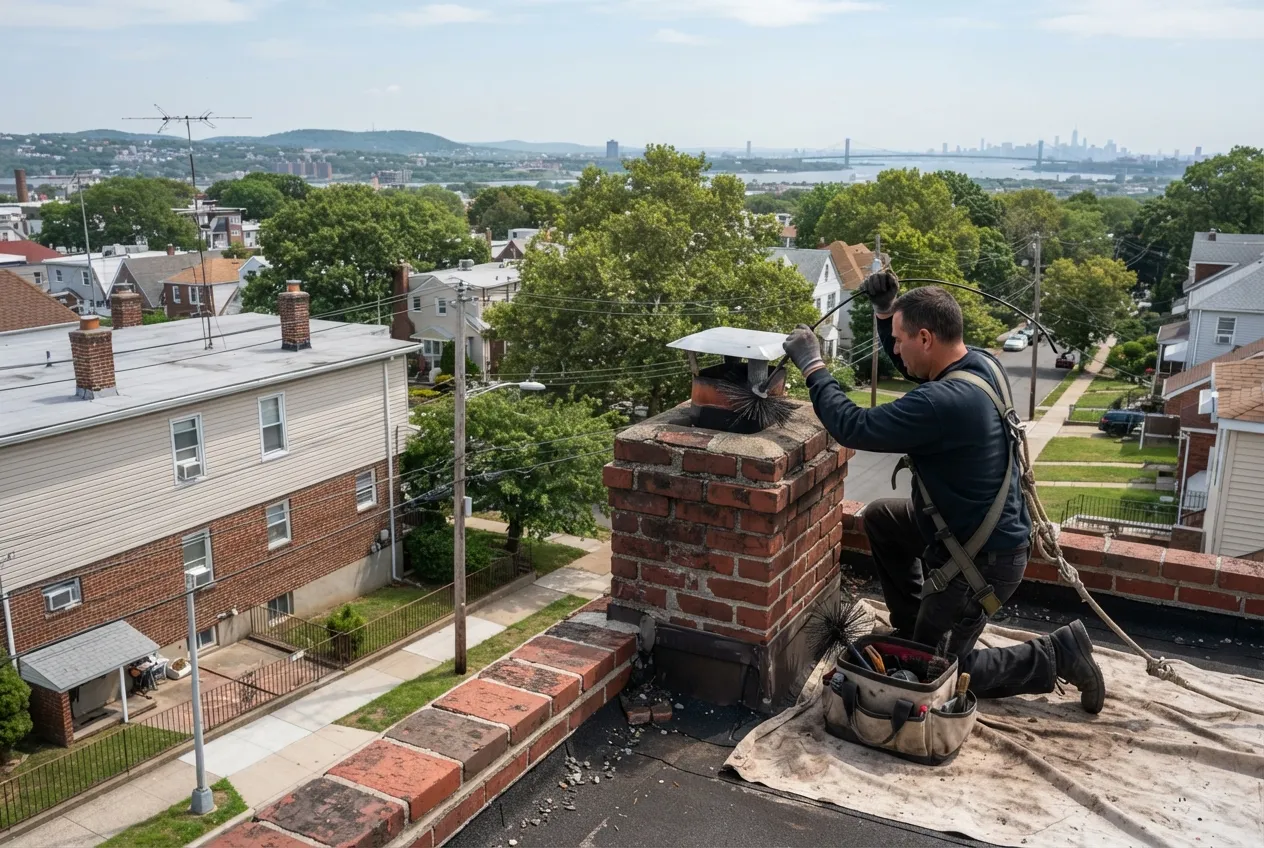
Chimney and Duct Cleaning FAQ
Serving Staten Island and nearby cities.
- Diagnosis before any repair
- Photos of every finding
- Written price before we start
These are plain answers to the questions Staten Island homeowners ask us most about chimney sweeping, inspections, repairs and liners, dryer vents, air ducts, and what happens on the day of a visit. If your question isn't covered here, reach out and ask. We'd rather explain things before we arrive than surprise you once we're there.
How to reach us
The easiest way to reach us is through the contact form on this site. Tell us about your home and what you're noticing, and we'll follow up to confirm the details and set up a visit.
A few details up front help us bring the right equipment and plan the right amount of time:
- Your neighborhood and type of building (detached house, rowhouse, or apartment building)
- The service you think you need, or the problem you're seeing
- What you heat with, and whether you've recently changed fuel or appliances
- Access notes, such as a locked roof hatch or pets at home
- Photos, if you can take them safely from the ground or indoors
FAQ
Frequently asked questions
How often should my chimney be swept?
The NFPA 211 standard calls for chimneys, fireplaces and vents to be inspected once a year. Whether you also need a sweep depends on what the inspection finds, such as soot or creosote buildup or debris. Many homeowners schedule before New York City's heat season starts on October 1, so the system is ready when it's needed most.
What are the signs my chimney needs a sweep?
Common signs include a strong smoky or campfire smell, smoke coming back into the room, fires that are hard to start or keep going, and black flakes falling into the firebox. Birds or other animals nesting in the flue are another reason to call. If you notice any of these, stop using the fireplace until it's checked.
Do gas fireplaces and boilers need chimney service too?
Yes. The NFPA 211 standard covers vents as well as chimneys and fireplaces, and it calls for a yearly inspection whatever the fuel. Gas appliances don't leave heavy soot, but their flues can still become blocked, damaged or corroded.
What's the difference between a Level 1, 2 and 3 chimney inspection?
A Level 1 inspection is the routine check used when nothing about your system has changed. A Level 2 is called for when something changes, such as a new appliance or a switch of fuel, or when the home is sold. A Level 3 is used when a suspected hidden hazard can only be reached by opening part of the chimney or building.
I'm buying or selling a home. Do I need a chimney inspection?
Under the inspection levels chimney professionals use, a home sale calls for a Level 2 inspection. It looks more closely than a routine check and often includes a camera inspection of the flue. That gives buyers and sellers a clear picture of the chimney's condition before closing.
Why would I need a new liner when converting from oil to gas?
When a New York City building converts its boiler from oil to gas, the chimney has to be evaluated as part of the work. Gas exhaust produces acidic condensate that can corrode a masonry flue, so a new liner is often needed. Our certified technicians can evaluate your chimney and install a properly sized liner if one is required.
Water is leaking around my chimney. What can be done?
Leaks often come from a missing or damaged chimney cap, a rusted chase cover, a cracked crown, failed flashing, or masonry that absorbs water. We find the source first, then recommend the fix, which may be a new cap or chase cover, masonry repair, or chimney waterproofing. Fixing leaks early helps prevent bigger damage to the brick and the walls around it.
My fireplace damper is stuck or won't close. Can you fix it?
Yes, fireplace and damper repair is one of our services. A damper that won't close lets heated air escape, and one that won't open is a smoke hazard. Depending on its condition, we can repair the existing damper or recommend a replacement.
When does a chimney need rebuilding instead of repair?
Many problems, such as loose bricks or worn mortar joints, can be handled with targeted repairs. Rebuilding may be needed when the masonry is leaning, crumbling across a large area, or badly damaged above the roofline. We'll show you what we found and explain why we're recommending one option over the other.
Why is dryer vent cleaning important?
According to the U.S. Fire Administration, failure to clean is the leading factor contributing to clothes dryer fires in homes. Lint builds up in the vent line over time, even if you empty the lint trap after every load. Warning signs include clothes taking longer to dry, a hot laundry room, and lint collecting around the outside vent opening.
Should I get my air ducts cleaned?
The U.S. EPA advises cleaning air ducts when there is substantial visible mold growth, signs of vermin, or excessive dust and debris. It also notes that duct cleaning has not been shown to prevent health problems, and it urges care with chemical treatments. We'll tell you honestly whether your ducts need cleaning and talk through any treatment with you before it's used.
What should I do before you arrive?
Please don't use the fireplace or wood stove the day before your visit so the ashes and flue have time to cool. Clear the area around the fireplace, appliance or dryer, and move anything fragile off the mantel. Let us know ahead of time about any access issues.
How long does a visit take?
It depends on the service and what we find. A routine sweep and inspection takes much less time than a liner installation or masonry repair, which may run across more than one visit. We'll give you an estimate of the time when we schedule and update you if anything changes.
Will cleaning make a mess in my home?
We lay down drop cloths around the work area and use vacuum equipment designed to contain soot and dust. Our goal is to leave the room as clean as we found it. If something gets missed, point it out and we'll take care of it.
What should I do with my pets?
Please keep pets in a closed room away from the work area while we're there. Doors may be open, equipment and hoses will be on the floor, and the noise can upset animals. It keeps your pets safe and lets us work without interruptions.
How do you get roof access in rowhouses and apartment buildings?
Many chimneys in rowhouses and apartment buildings are reached through a roof hatch or bulkhead door. Please arrange access with your landlord, superintendent, co-op or condo board, or neighbors ahead of time if needed, and let us know if the hatch is locked. Some work can be done from inside, and we'll tell you in advance whether roof access is needed for your job.
Schedule a chimney or vent inspection
Tell us what you are noticing, whether it is a smell, a leak, a slow dryer or just a yearly check. We will set up a visit, show you what we find, and give you a written price before any work begins.