
The short answer
A dryer vent needs cleaning when drying takes longer, the laundry room gets hot or humid, or lint collects around the outside hood. EverHearth cleans the full run from the dryer to the exterior with rotary brushes and HEPA vacuums, then checks the airflow. Regular cleaning matters because the U.S. Fire Administration identifies failure to clean as the leading factor in home dryer fires.
Every load you dry pushes warm, damp air and fine lint through the vent behind your machine. Most of that lint leaves the house, but some catches along the walls of the duct, in bends, and at the exterior hood. Over months it builds into a layer that slows airflow, traps heat, and gives a spark or a hot element something to ignite. EverHearth Chimney Service cleans dryer vents for homeowners in Staten Island and nearby cities, from short runs that exit through a side wall to long vents that travel through a basement ceiling or up to the roof. Our certified technicians clean the full length of the run, confirm that air moves freely at the outside termination, and tell you plainly what they found.
Signs you need it
A clogged dryer vent rarely fails all at once. It gives small signals that are easy to blame on an old dryer or a heavy load. If you notice any of the following, have the vent checked before you replace the machine.
- Clothes need two cycles, or towels come out damp on a normal setting
- The top or sides of the dryer feel unusually hot during a cycle
- A hot or burning smell in the laundry room while the dryer runs
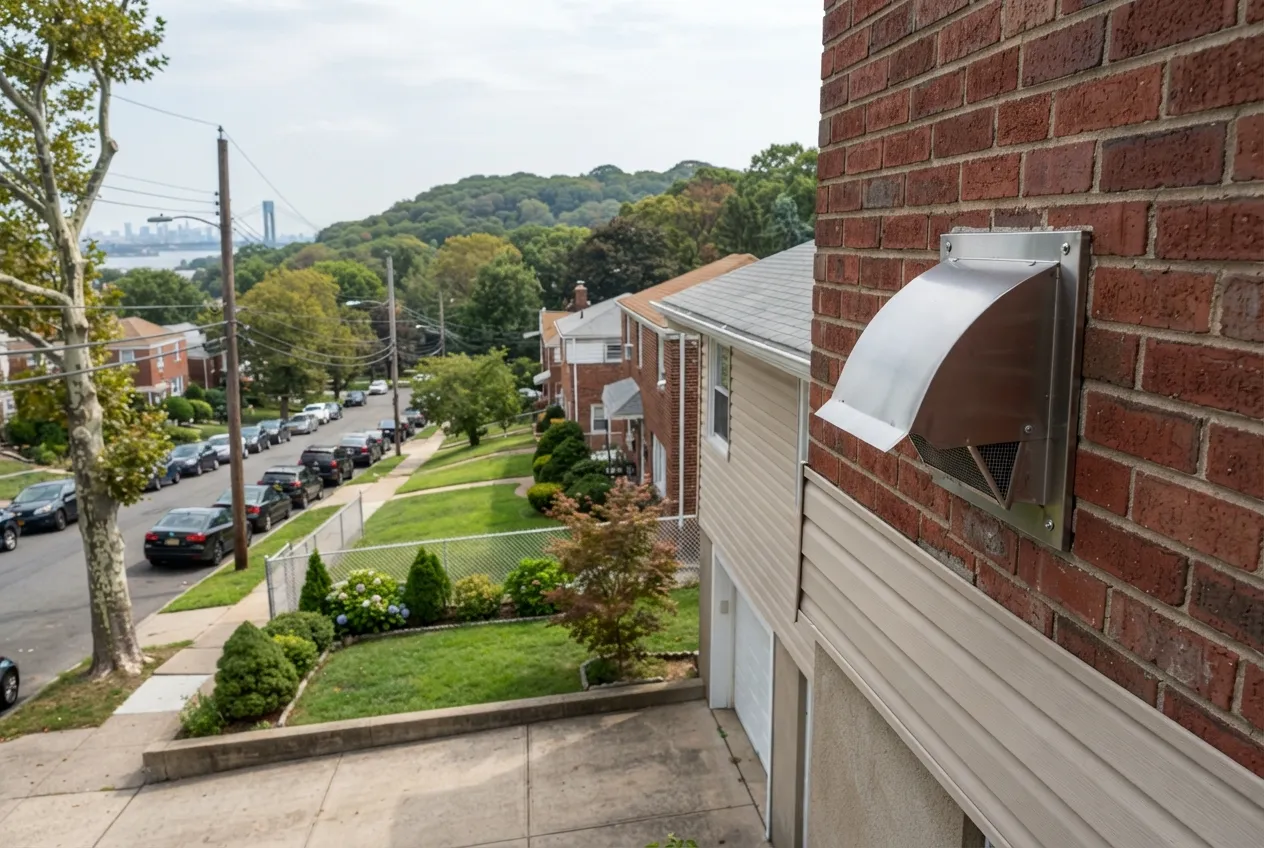
- Lint or dust blowing out around the exterior vent hood, or lint built up on the siding near it
- The outside flap barely opens, or you feel weak airflow there while the dryer is on
- Scratching, chirping, or rustling near the vent, which can mean a bird or rodent is nesting in it
- Extra humidity, condensation, or a musty smell in the laundry area
- A crushed, kinked, or disconnected foil hose behind the dryer
What's included in a dryer vent cleaning
We clean the whole system, not just the lint trap and the first few feet of hose. Here is what a standard visit covers.
- Pull the dryer out carefully and disconnect the transition hose
- Inspect the transition hose and replace it if it is crushed, torn, or a plastic or thin foil type
- Clean the full vent run with rotary brushes sized to the duct
- Collect loosened lint with a HEPA vacuum at the dryer end
- Clear the exterior hood or roof cap, including the flap or damper
- Remove nesting material or debris if it is present and reachable
- Vacuum the lint trap housing and the floor area behind the dryer
- Reconnect the dryer and run it to confirm strong airflow at the outside
- Walk you through what we found, including any damaged sections or loose joints
How our crew works inside your home and on the roof
Inside, we lay drop cloths from the door to the laundry area and around the dryer before moving anything. The dryer is slid out on the cloths so floors stay protected, and gas dryers are handled with care at the supply line. We connect a HEPA vacuum at the dryer end before brushing so that dislodged lint is pulled into the machine instead of drifting into the room.
Our rotary brushes spin as they travel through the duct, scrubbing compacted lint off the walls and around elbows that a hand brush cannot reach. On long or hidden runs, such as vents that pass through a finished ceiling, we may use a camera to see the inside of the duct, find a blockage, or check for a separated joint.
Many Staten Island homes vent the dryer through a side wall, but some run up to a roof cap. When the vent ends on the roof, a technician works from the roof to clear the cap, remove lint and nesting material, and check that the cap is not screened in a way that traps lint. Roof work depends on safe access and dry conditions, so we will tell you ahead of time if weather affects the schedule.
Why regular cleaning matters
According to the U.S. Fire Administration, failure to clean is the leading factor contributing to clothes dryer fires in homes. Lint is light and catches fire easily, and a restricted vent keeps more heat inside the dryer and the duct. Cleaning the vent removes that fuel and lets hot air leave the way it should.
A clear vent also helps the dryer do its job. When air moves freely, clothes dry in fewer cycles and the machine is not straining against a blockage. If you have a gas dryer, a clear vent matters even more, because it carries combustion exhaust out of the house along with the moist air.
What affects the price
Every vent is different, so we look at the setup before giving a price. These are the main factors.
- Length and routing of the vent, including how many bends it has
- Where it ends: a ground-level wall vent, a high wall, or the roof, and how easy that spot is to reach
- Gas or electric dryer, since gas units need extra care when moved and reconnected
- Duct size, material, and condition, including crushed or loose sections
- How much lint has built up, and whether nests or debris are inside
- Whether a camera inspection is needed to locate a blockage or check hidden sections
- Repairs such as replacing the transition hose, a section of duct, or the exterior hood
How a visit works
When you contact us, we ask where the dryer sits, roughly where the vent exits, and what problems you have noticed. That helps us send the right equipment and plan for roof access if needed.
On the day of service, the technician looks at both ends of the vent before starting, explains the plan, and sets up drop cloths and the vacuum. After cleaning, we run the dryer and check the airflow outside. Before leaving, we show you what was removed, point out any parts that should be repaired or replaced, and answer your questions. Nothing beyond the agreed work is done without your approval.