
The short answer
A chimney cap keeps rain, debris and animals out of the flue, and a chase cover seals the top of a framed chimney so water cannot soak the chase. If you hear animals, find water in the firebox, or see rust streaks or staining on the chimney, the cap or chase cover likely needs to be replaced or installed.
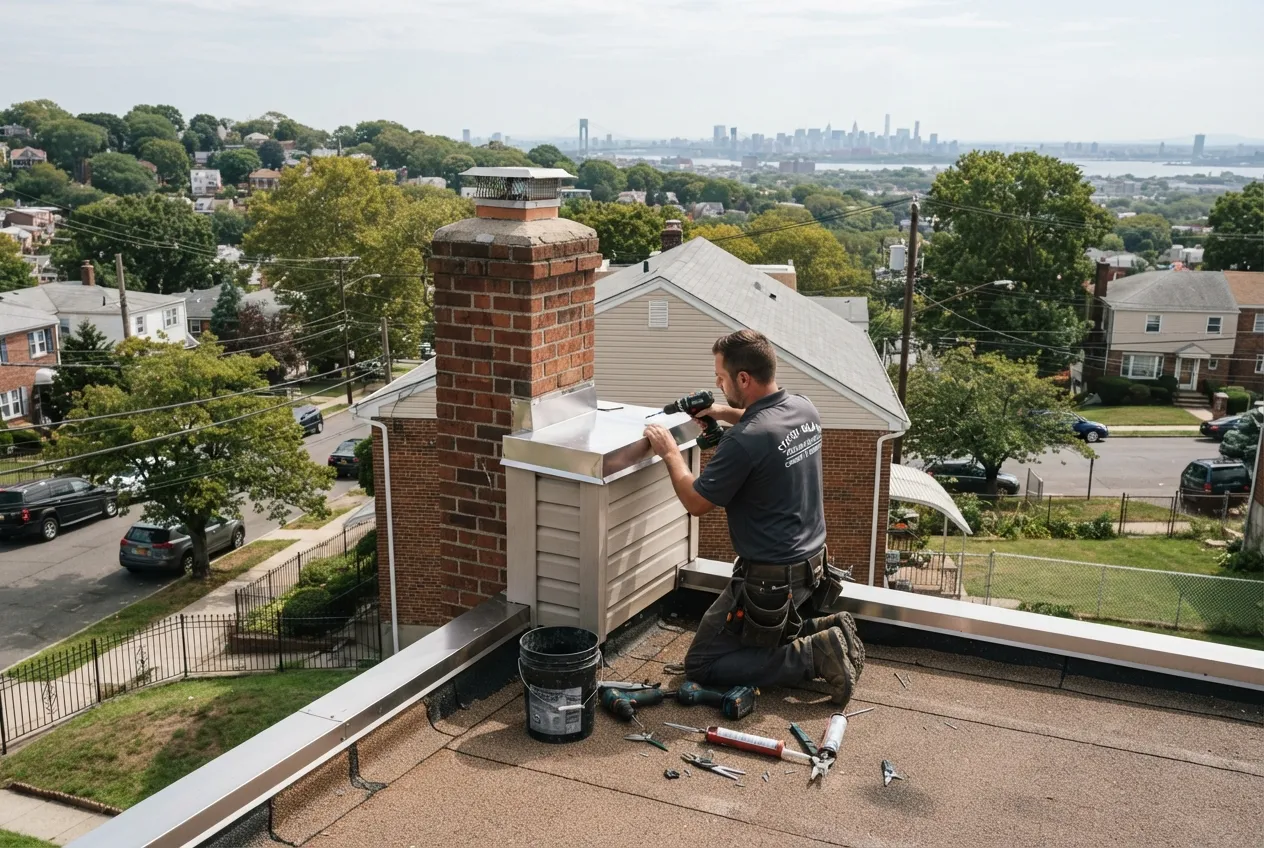
The top of your chimney takes more weather than almost any other part of the house. A chimney cap sits over the flue opening to keep out rain, snow, leaves and animals. A chase cover is the metal panel that seals the top of a framed chimney chase, the boxed-in chimney common on homes with factory-built fireplaces or siding-clad chimneys. When either one is missing, rusted, loose or the wrong size, water and animals find their way in, and the damage usually shows up indoors before anyone looks at the roof. EverHearth Chimney Service installs and replaces chimney caps and chase covers for homeowners in Staten Island and nearby cities. Our certified technicians measure each flue and chase, fit a cap or cover sized for it, and check the chimney below so you know what condition it is in before the new top goes on.
Signs you need a new chimney cap or chase cover
Most homeowners never see the top of their chimney, so the warning signs show up inside the house or on the outside walls. Any of these is a good reason to have the top of the chimney checked.
- Scratching, chirping or flapping sounds in the chimney, especially in spring
- Water in the firebox, or rust on the damper or fireplace doors
- Leaves, twigs, nesting material or brick flakes landing in the firebox
- White staining on the brick, a sign that water is moving through the masonry
- Rust streaks running down the siding or chase from a corroding chase cover
- A musty or smoky creosote smell that gets stronger after rain or on humid days
- Poor draft or smoke pushed back into the room on windy days
- A cap that is visibly bent, loose, missing, or sitting crooked after a storm
What's included
Every cap or chase cover job starts with a look at the whole top of the chimney, not just the piece being replaced. That way the new cap or cover fits correctly and we can tell you about any problems that would cut its life short.
- Visual check of the crown, flue tile or liner, masonry or chase siding, and flashing
- Measurement of each flue and the chase top so the cap or cover is sized to fit
- Removal of the old cap or chase cover and any loose fasteners
- Removal of nests, leaves and debris from the top of the flue where it can be reached
- Installation of a cap with mesh screening to keep animals and debris out
- Chase covers fitted with a sloped or crowned surface and a drip edge so water sheds away from the siding
- Secure fastening and sealing so the cap or cover holds up to wind
- Camera inspection of the flue when we need to check for blockages or damage below
- Photos of the finished work and a plain explanation of anything else we found
How our crew works on your roof and inside your home
Most of the work happens on the roof. The crew sets up ladders and roof safety gear and works from the top of the chimney. They remove the old cap or cover, clean off rust and old sealant, and check the crown or chase framing for soft spots or cracks before anything new goes on. Caps are chosen to match the flue, whether it is a clay tile flue, a metal liner, or several flues sharing one crown.
When the job needs work inside the house, for example clearing nest material that fell down the flue or sweeping a flue before a new cap goes on, we protect the room first. We lay drop cloths from the door to the fireplace and run HEPA vacuums during the work to capture soot and dust. Rotary brushes clear buildup from the flue walls. A camera run down the flue lets us see blockages, cracked tiles or liner damage that cannot be seen from the top or the firebox. We clean up the work area before we leave.
The standard we follow
We follow NFPA 211, the national standard that calls for chimneys, fireplaces and vents to be inspected once a year. Chimney professionals use three inspection levels. A Level 1 inspection fits when nothing about the system has changed. A Level 2 inspection is used when the system changes, such as a new appliance or a switch of fuel, or when the home is sold. A Level 3 inspection is needed only when a hidden hazard has to be reached by opening part of the chimney or the building.
A cap or chase cover visit is a good time to take care of the yearly inspection, since we are already on the roof. If your home is converting a boiler from oil to gas, the chimney has to be evaluated as part of that work, and a new liner is often needed because gas exhaust produces acidic condensate that can corrode a masonry flue. The liner and cap should be planned together so they fit each other.
What affects the price
Every chimney top is different, so we quote after we have measured and looked at the chimney. These are the main factors that change the scope of the job.
- Chimney height, roof pitch and how easy the roof is to reach safely
- Number of flues and their size and shape, which decide the cap style
- Fuel type, since wood, gas and oil flues may call for different caps
- Size of the chase and whether the chase framing or siding has water damage
- Condition of the crown, flue tiles or liner under the cap
- How much nest material, debris or creosote has to come out of the flue
- Whether a camera inspection, sweeping or repairs are needed first
How a visit works
When you contact us, tell us what you have noticed, whether it is animal sounds, water, staining or a cap you can see is damaged. We schedule a visit and, when possible, measure and inspect on the first trip. You get a clear explanation of what we found, what we recommend, and the cost before any work starts.
Many replacements can be done in a single visit. Custom-sized chase covers or caps for unusual flues may need a second trip after the part is made. Spring and summer are good times for this work because you can fix water and animal problems before the heating season. In New York City, heat season runs from October 1 through May 31.