
The short answer
Fireplace and damper repair fixes stuck, rusted or warped dampers, cracked or loose firebrick, and failing mortar joints and smoke chamber surfaces that let smoke or heat escape. EverHearth inspects the fireplace and flue, explains what is wrong, and completes the repair with clean, careful work inside your home.
A fireplace depends on parts most people rarely look at: the damper that opens and seals the flue, the firebrick that takes direct heat, and the mortar joints that hold the firebox together. When one of these fails, you may notice smoke drifting into the room, cold air pouring down the chimney all winter, or heat reaching places it shouldn't. EverHearth Chimney Service repairs fireplaces and dampers for homeowners in Staten Island and nearby communities. Our certified technicians find the cause, show you what they found, and repair it with materials made for fireplace temperatures, so you can decide on the work with a clear picture of your fireplace's condition.
Signs you need it
Fireplace and damper problems usually show up gradually. A damper that used to swing freely starts to stick, or a few brick flakes appear in the ashes. Each of these is worth a look before the next fire, because small problems in a firebox tend to get worse with every heating cycle.
- Smoke or a creosote smell in the room, even when the fireplace isn't in use
- Poor draft: smoke rolls out of the opening instead of rising up the flue
- Brick flakes, crumbling mortar or rust chips collecting in the firebox
- Cracked, loose or missing firebrick on the back or side walls
- A damper that won't open, won't close all the way, or has a broken handle or chain
- Cold drafts coming down the chimney when the fireplace is off
- Water or damp ashes in the firebox after rain
- White staining on the brick around the fireplace opening, a sign that moisture is moving through the masonry
- Scratching, chirping or other animal noises above the damper
What's included
Every repair visit starts with an inspection of the fireplace and the lower flue so we fix the cause, not only the symptom. The exact scope depends on what we find, and we review it with you before any repair begins.
- Inspection of the firebox, damper, smoke chamber and visible flue
- Operating test of the damper and its handle, chain, pin or cable
- Freeing, adjusting or replacing a stuck, rusted or warped throat damper
- Installing a top-sealing damper at the chimney top when the original can't be repaired
- Replacing cracked or missing firebrick and repointing failed joints with refractory mortar
- Repairing or parging the smoke chamber where gaps or rough masonry hurt draft
- Checking for water entry and noting crown, cap or flashing issues that feed it
- Photos or camera footage of problem areas so you can see the condition yourself
- Cleanup of the work area and a walk-through of the finished repair
How we work in your home and on the roof
Inside, the crew lays drop cloths from the door to the hearth and seals the fireplace opening before any brushing or demolition. HEPA vacuums run during the work to capture soot and mortar dust at the source. When the flue needs cleaning before a repair, we use rotary brushes so the masonry is clean enough to inspect and to bond new mortar properly. A chimney camera lets us see the smoke chamber and flue walls that can't be viewed directly from the firebox.
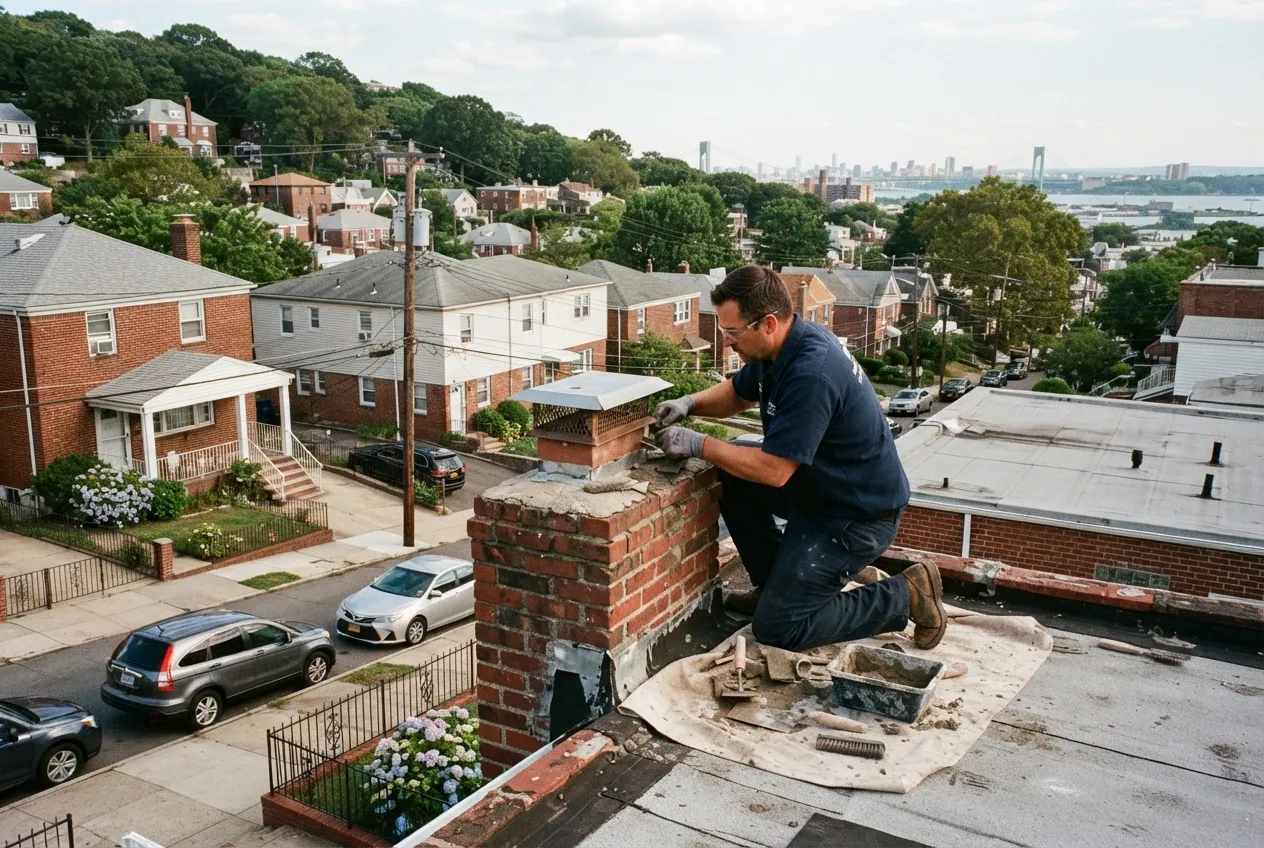
On the roof, we check the chimney top for a missing or damaged cap, open joints in the crown, and failing flashing, since water from above is a common reason dampers rust and firebrick breaks down. If a top-sealing damper is part of the job, it is mounted on the flue at the chimney top and its cable is run down to a handle in the firebox. We work only when roof conditions allow safe access.
The standard we follow
Our work follows NFPA 211, the national standard for chimneys, fireplaces and vents, which calls for these systems to be inspected once a year. Chimney professionals use three inspection levels. A Level 1 inspection fits a fireplace whose use and setup haven't changed. A Level 2 inspection applies when the system changes, such as adding an insert or switching fuel, or when the home is being sold. A Level 3 inspection is used when a suspected hazard is hidden and part of the chimney or building has to be opened to reach it.
Most damper and firebox repairs begin with a Level 1 or Level 2 inspection. We'll tell you which one applies and why before we start.
What affects the price
Every fireplace is different, so we quote after seeing yours. The main factors are the chimney's height and how hard the roof is to reach, the fuel the fireplace burns, the size and condition of the flue, and how much soot and creosote has built up. A damper adjustment costs less than replacing a damper or rebuilding a firebox wall. A camera inspection, extra cleaning before repair, or related crown or cap work also changes the scope. We explain each item so you know what you're paying for.
How a visit works
When you contact us, we ask what you've noticed and how you use the fireplace, then schedule a visit. Please let the fireplace go cold for at least a day beforehand and clear a path to the hearth.
At the visit, the technician protects the room, inspects the fireplace and chimney, and shows you photos or camera footage of any problems. You get a clear explanation of the options. Smaller repairs can often be done the same day; larger ones, such as firebox rebuilding, are scheduled so mortar can cure properly before you light a fire. We finish with cleanup and a walk-through showing what we repaired.