
The short answer
A chimney sweep in Huguenot removes creosote, soot and debris from your flue and checks the damper, cap and crown for problems. The NFPA 211 standard calls for a yearly inspection, so most homeowners book a sweep and inspection together once a year, ideally between heating seasons.
Huguenot sits on Staten Island's South Shore, in ZIP codes 10309 and 10312, about 3 miles northeast of our Staten Island office. Many homes here are detached or semi-detached houses with a fireplace, a wood stove, or a chimney that vents a gas or oil boiler and water heater. EverHearth Chimney Service sends certified technicians to sweep those chimneys, remove creosote and soot, and clear blockages. We also tell you plainly what condition your flue is in. This page explains what a sweep in Huguenot involves, how often you need one, and what to expect when we arrive.
What happens during a chimney sweep
A sweep is more than running a brush up the flue. We start by covering the area around your fireplace or appliance with drop cloths and running a vacuum system so soot stays out of the room. Then we clean the flue from the firebox or appliance connection to the top. We also check the parts you can't easily see yourself:
When we finish, we walk you through what we found. If something needs repair, we explain why and what your options are before any further work is discussed.
- Brushing the flue liner to remove soot and creosote buildup
- Clearing the smoke shelf, smoke chamber and firebox of debris
- Checking that the damper opens, closes and seals
- Looking for nests, leaves or fallen masonry that can block the flue
- Examining the chimney cap and crown from the roof when it's safe to reach
- Noting cracks, missing mortar or water stains for you to review
Chimneys in Huguenot homes
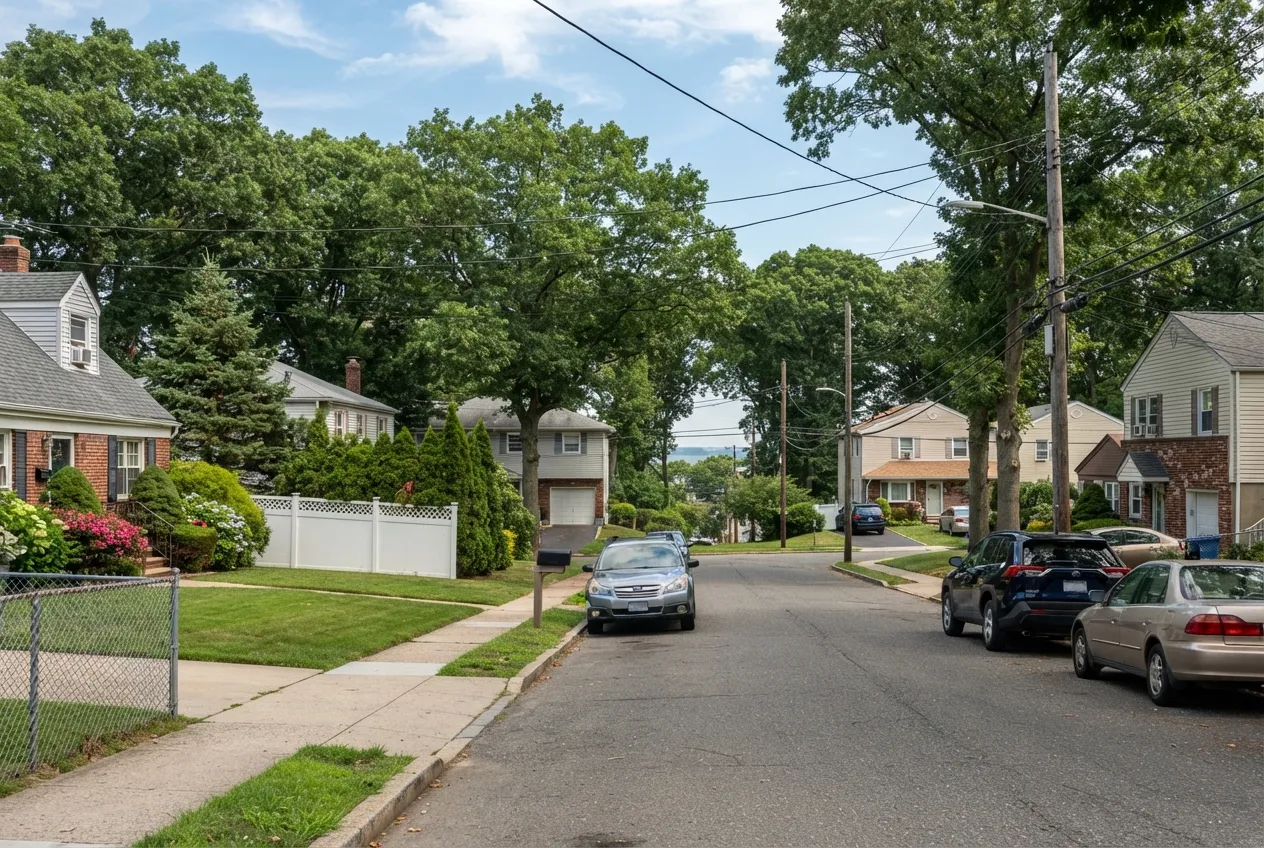
Housing in Huguenot is mostly detached and semi-detached homes, along with townhouses and some newer construction. That mix means we see a range of setups. Older houses often have masonry fireplaces, newer ones may have prefabricated fireplaces with metal flues, and some chimneys only vent a boiler or water heater in the basement.
Each one needs a slightly different approach. Wood-burning fireplaces collect creosote, a tar-like residue that can catch fire inside the flue if it builds up. Factory-built metal flues need the right brushes so the liner isn't scratched or damaged. Chimneys that vent gas or oil equipment show less visible soot. They can still collect debris, nesting material and corrosion that keep exhaust from venting safely out of the house.
Homes on the South Shore also take wind-driven rain off the water. During every sweep, we pay close attention to crowns, caps and flashing, where moisture tends to get in.
How often to schedule a sweep
The NFPA 211 standard calls for chimneys, fireplaces and vents to be inspected once a year. The inspection tells you whether the flue needs sweeping. If you burn wood regularly, the answer is usually yes.
Chimney professionals use three inspection levels. A Level 1 inspection fits when nothing about your system has changed. A Level 2 inspection is called for when the system changes, such as a new appliance or a switch of fuel, or when the home is sold. A Level 3 inspection is used when a hidden hazard has to be reached by opening part of the chimney or building.
We pair the yearly inspection with your sweep, so you get one visit and a clear picture of the chimney's condition.
Planning an oil-to-gas conversion
Some Huguenot homeowners are replacing oil boilers with gas equipment. When a New York City building converts from oil to gas, the chimney has to be evaluated as part of the work. A new liner is often needed, because gas exhaust produces acidic condensate that can corrode a masonry flue.
If you're planning a conversion, schedule a sweep and evaluation before the new boiler goes in. Removing years of oil soot early shows the flue's real condition. That gives you and your heating contractor time to plan for a liner instead of discovering the need partway through the project.
When to book, and nearby areas we serve
New York City's heat season runs from October 1 through May 31, when fireplaces and boilers in Huguenot work hardest. Late spring and summer are good times to book. You can have the chimney cleaned after a season of use and get any repairs finished before cold weather returns. Early fall is the busiest stretch, so booking ahead helps.
Along with Huguenot, we sweep chimneys in nearby Annadale, Prince's Bay, Woodrow, Arden Heights and Rossville.
More services in Huguenot
- Chimney Inspection in Huguenot
- Chimney Repair in Huguenot
- Air Duct Cleaning in Huguenot
- Chimney Liner Installation in Huguenot