
The short answer
You need a new chimney liner in Huguenot when the existing flue is cracked or deteriorated, when you switch a boiler or furnace from oil to gas, or when a new appliance needs a properly sized flue. We start with an inspection, then install a liner matched to your appliance and chimney.
A chimney liner is the inner channel that carries smoke and exhaust gases up and out of your home. In Huguenot, many detached houses and attached townhouses have masonry chimneys serving a fireplace, a boiler, a furnace, or a water heater, sometimes more than one. When a liner cracks, wears out, or no longer matches the appliance it serves, heat and exhaust can reach the brick and the framing around it. EverHearth Chimney Service installs and replaces chimney liners for homes in Huguenot (ZIP codes 10309 and 10312), about 3 miles from our Staten Island office. Our certified technicians inspect the flue first, explain what they find, and recommend a liner only when the chimney needs one.
When a Huguenot Home Needs a New Liner
Most liner work in this part of the South Shore comes from one of a few situations. Each one usually shows up during an inspection or after a change to the heating system.
A liner problem can't always be seen from inside the house. Signs include flaking or crumbling tile in the fireplace, water stains near the chimney, a strong odor when the heat runs, or white staining on the outside brick. If you notice any of these, have the chimney looked at before you rely on it through the winter.
- Cracked, shifted, or missing clay tile sections in an older masonry flue
- A boiler or furnace converting from oil to gas
- A new heating appliance, water heater, or wood or gas insert that needs a differently sized flue
- Corrosion or crumbling mortar inside the flue from years of acidic exhaust
- Damage found after a chimney fire, or problems uncovered during a home sale
Oil-to-Gas Conversions and Your Chimney
Many Staten Island homes that once heated with oil have switched, or plan to switch, to gas. In New York City, the chimney has to be evaluated as part of a boiler conversion from oil to gas. A new liner is often needed because gas exhaust produces acidic condensate that can corrode a masonry flue over time.
An unlined or tile-lined chimney that handled oil exhaust for years may not hold up once gas exhaust starts condensing inside it. A properly sized liner keeps that moisture contained and helps the appliance vent the way it was designed to. If you are planning a conversion, bring us in early so the chimney work can be scheduled alongside the boiler replacement rather than after it.
How We Install a Chimney Liner
Every job starts with a look inside the flue. The NFPA 211 standard calls for chimneys, fireplaces, and vents to be inspected once a year, and it describes three inspection levels. A change of fuel or a new appliance calls for a Level 2 inspection, which includes a camera scan of the flue's interior. If a hidden hazard has to be reached by opening part of the chimney or wall, that is a Level 3 inspection, and we will explain why before any opening is made.
Once we know the flue's condition and dimensions, we size the liner to the appliance it serves. For most heating appliances, that means a stainless steel liner run from the appliance connection to the top of the chimney, with a cap at the top. Some chimneys also need masonry repair at the crown or flashing so water stays out of the new system.
- Inspection and camera scan of the existing flue
- Measurement of the flue and review of the appliance's venting requirements
- Cleaning of the chimney before the liner goes in
- Liner installation, connection to the appliance, and top cap
- A final check that the system drafts properly, with photos of the finished work
Planning Around the Heating Season
New York City's heat season runs from October 1 through May 31. Liner work on a boiler or furnace flue means the heating system is off for part of the job, so many homeowners prefer to schedule it in late spring or summer. If a problem turns up in the middle of winter, we will tell you plainly whether the system is safe to keep running until the work can be done.
Fireplace liners have more scheduling flexibility, but it still makes sense to finish the work before you plan to use the fireplace in the fall.
Serving Huguenot and Nearby Neighborhoods
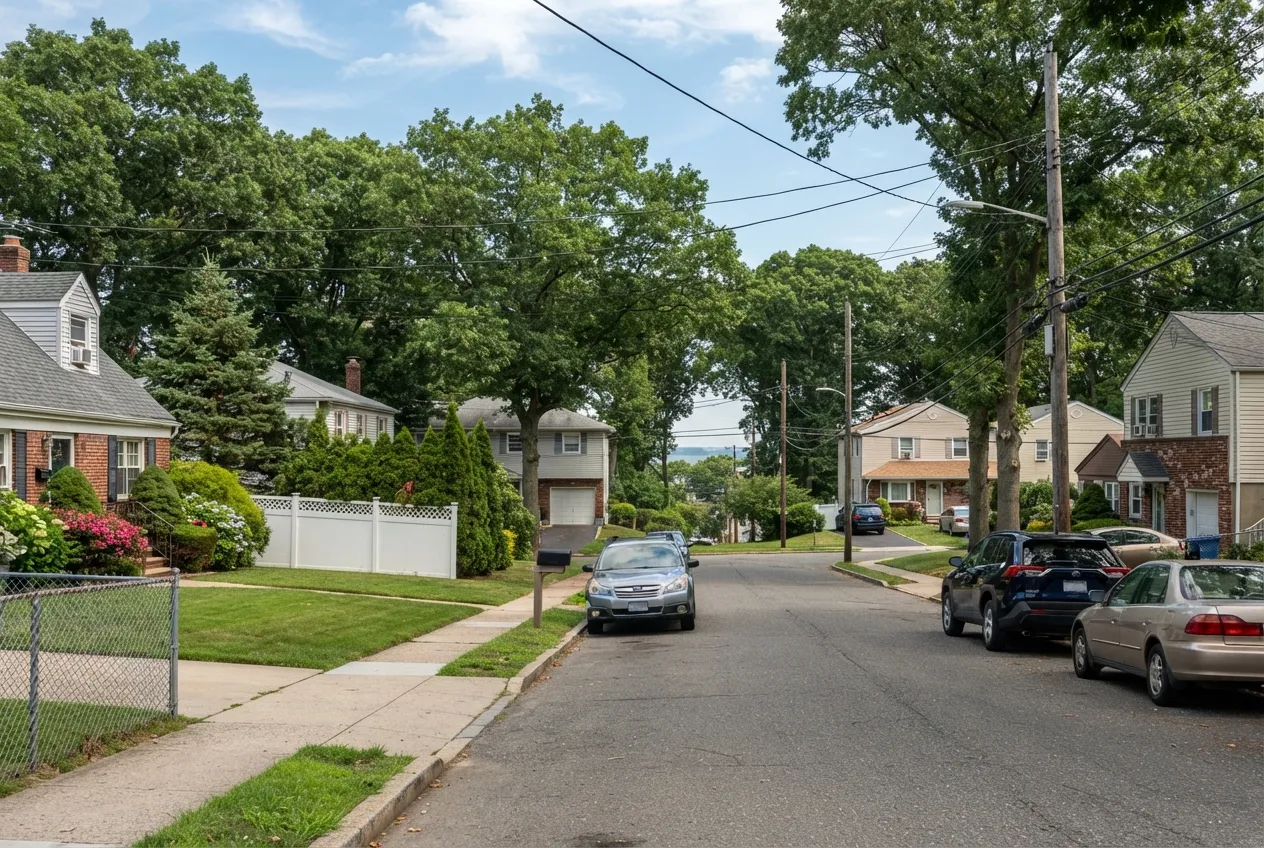
Huguenot is mostly detached single-family homes with some attached and semi-attached townhouses. Chimneys range from older masonry stacks to newer chases built for factory-made fireplaces. We work on all of these, and we also install liners in Annadale, Prince's Bay, Woodrow, Arden Heights, and Rossville.
If you are not sure whether your chimney has a liner at all, or what condition it is in, an inspection is the right first step. We will show you what we see and give you clear options.
More services in Huguenot
- Chimney Sweep in Huguenot
- Chimney Inspection in Huguenot
- Chimney Repair in Huguenot
- Air Duct Cleaning in Huguenot